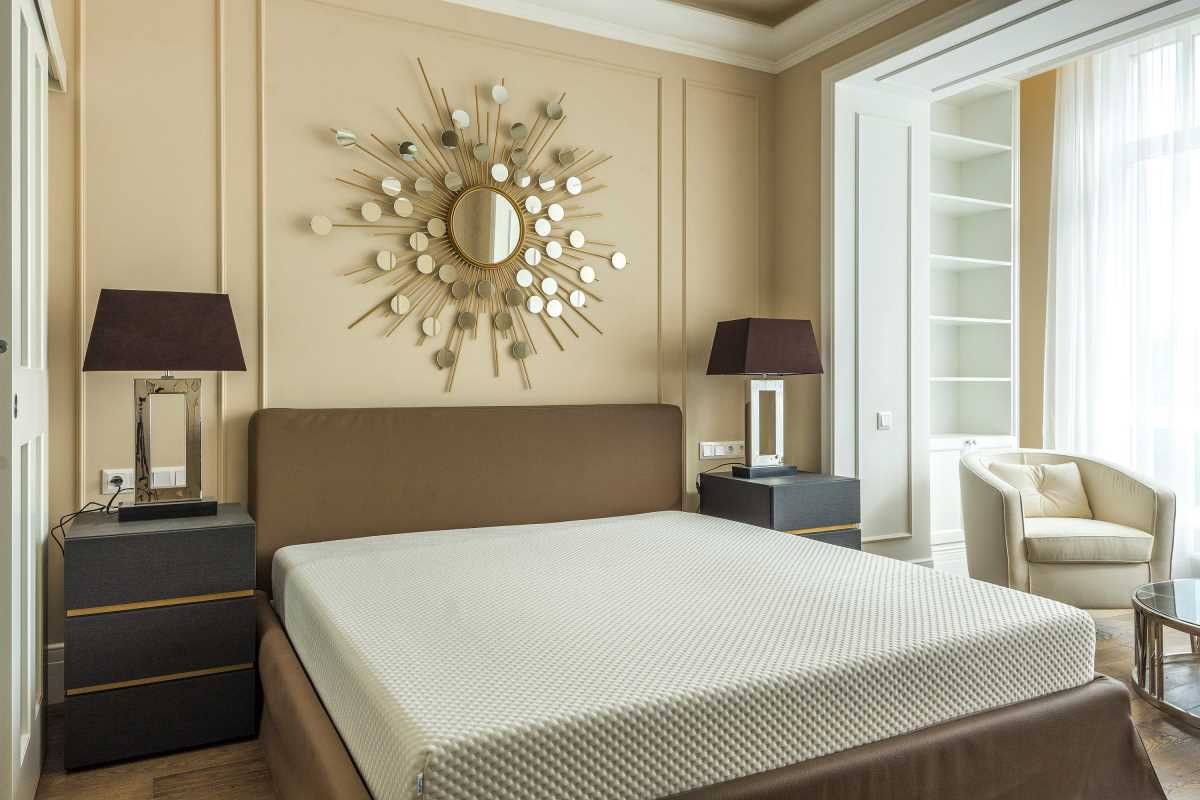
 (Image via
We spend nearly one-third of our entire lives asleep, yet many of us treat our bedrooms like multifunctional storage units rather thana place of rest. It is all too common to see bedrooms doubling as home offices, laundry folding stations, or entertainment centers filled with blinking electronics, but this clutter and confusion signals our brains to stay alert when we should be winding down. If you find yourself tossing and turning or waking up feeling groggy and uninspired, the problem might not be you; it might be your room. By intentionally designing your bedroom to support deep rest, you can transform it into a haven that practically guarantees a better night’s sleep and a more energetic morning.
The Psychology of the Sanctuary
Your bedroom should trigger a Pavlovian response. Just as the smell of coffee might wake you up, walking into your bedroom should make your shoulders drop and your breathing slow. This is about psychological association. If your brain associates your bed with answering emails, watching stressful news, or arguing with a partner, it will remain in a state of high alert.
To create a sanctuary, you must ruthlessly eliminate the non-essentials. This room has two primary purposes: sleep and intimacy. Anything that does not support those two goals is a distraction. This means moving the desk to the living room, taking the exercise bike to the basement, and finding a new home for that pile of unfinished projects.
Color Psychology: Painting Your Way to Peace
The colors you see right before you close your eyes and right when you open them have a subtle but powerful impact on your nervous system. While you might love a vibrant red or a high-energy orange in the kitchen, those colors are stimulants. They raise your heart rate and blood pressure—the exact opposite of what you want at 10 PM.
The Best Colors for Sleep
- Cool Blues: Studies consistently show that people with blue bedrooms get the most sleep. Blue is associated with calm waters and clear skies, naturally soothing the mind.
- Soft Greens: Green is the easiest color for the human eye to process. It evokes nature and tranquility.
- Muted Grays and Neutrals: These provide a blank slate that doesn't demand attention, allowing your mind to wander and relax.
Avoid high-gloss paints that reflect light. Opt for matte or eggshell finishes that absorb light and soften the room's overall feel.
The Foundation: Mattress and Pillow Selection
You can have the most beautiful bedroom in the world, but if your spine is twisted like a pretzel, you won't sleep well. Your mattress and pillow are the most critical tools in your sleep toolkit.
Finding Your Mattress Match
There is no single "best" mattress, only the best one for your sleeping style.
- Side Sleepers: You generally need a softer mattress that allows your hips and shoulders to sink in, keeping your spine straight.
- Back Sleepers: A medium-firm mattress is usually best to support the lower back curve.
- Stomach Sleepers: You need a firmer surface to keep your hips from sinking too far, which can strain the lower back.
The Pillow Equation
Your pillow's job is to fill the gap between your head and the mattress to keep your neck in a neutral alignment. If you are constantly fluffing, folding, or punching your pillow, it is time for a new one. Replace synthetic pillows every 1-2 years and foam ones every 3 years. It’s a hygiene issue as much as a comfort one—old pillows are heavy with dust mites and allergens.
Total Darkness: The Cave Principle
Human beings are diurnal creatures. We are biologically wired to sleep when it is dark. Even small amounts of artificial light can disrupt melatonin production, the hormone that regulates sleep. Your goal is to make your bedroom resemble a prehistoric cave: cool, quiet, and pitch black.
Eliminating Light Leaks
- Blackout Curtains: These are non-negotiable for deep rest. They block streetlights, car headlights, and early morning sun that might wake you before your alarm.
- Cover the LEDs: Look around your room at night. The charging light on the TV, the glow of the surge protector, the digital clock display—these are all "light pollution." Use small stickers or electrical tape to cover these aggressive little lights.
- Eye Masks: If you can't control the light coming in (perhaps due to a partner reading), a high-quality, contoured eye mask is a game-changer.
The Cool Down: Temperature Control
Your body temperature naturally drops as you drift into sleep. If your room is too hot, your body has to work overtime to cool itself down, which prevents you from entering the deep, restorative stages of sleep.
Science suggests the optimal temperature for sleep is surprisingly cool—around 65 degrees Fahrenheit (18 degrees Celsius).
Breathable Bedding
If you can't control the thermostat, control your micro-climate with your bedding choices.
- Natural Fibers: Stick to cotton, linen, or bamboo sheets. These materials breathe and wick moisture away from your body. Synthetic fabrics like polyester trap heat and sweat.
- Layering: Instead of one giant, heavy duvet, use layers. A sheet, a light blanket, and a comforter allow you to adjust your temperature throughout the night without waking up fully.
The Soundscape: Silence vs. Noise
Ideally, your bedroom would be silent. But if you live in a city, have noisy neighbors, or share a house with others, silence is rare. Sudden noises are what wake us up, jarring us out of sleep cycles.
To combat this, you need a "sound floor"—a consistent background noise that masks those sudden spikes in volume.
- White Noise Machines: These create a static sound (like a fan) that smooths out the audio environment.
- Pink Noise: This is deeper and often more soothing than white noise, sounding more like heavy rain or rustling leaves.
- Earplugs: If noise is a major issue, high-fidelity silicone earplugs can block sound without being uncomfortable to sleep in.
De-Tech Your Space
This is the hardest rule for most people to follow, but it is the most effective. Your phone, tablet, and TV are enemies of deep rest.
The Blue Light Problem
Screens emit blue light, which tricks your brain into thinking it is noon. Scrolling through social media right before bed suppresses melatonin and keeps your brain in an engaged, reactive state.
The Content Trap
It's not just the light; it's the content. Reading a frustrating email, seeing a stressful news headline, or watching a suspenseful show raises your cortisol levels.
The Strategy: Charge your phone in the kitchen. Buy an old-fashioned alarm clock for your bedside table. If you need to wind down, read a physical book or use an e-reader with a non-backlit screen. Make your bedroom a "no-phone zone."
Air Quality and Aromatherapy
Stale, stuffy air makes for restless sleep. We often keep our bedroom windows and doors shut tight, leading to a buildup of CO2 and allergens.
Improving Air Quality
- Ventilation: Open a window for 10 minutes before bed to flush out stale air and lower the temperature.
- Air Purifiers: A HEPA air purifier can remove dust, pollen, and pet dander, which helps prevent congestion that leads to snoring or mouth breathing.
- Plants: Snake plants and Aloe Vera release oxygen at night (unlike most plants that do it during the day), making them perfect bedside companions.
The Power of Scent
Scent is the only sense with a direct line to the brain's emotional center. You can train your brain to associate a specific smell with sleep. Lavender is the gold standard here; studies have shown it lowers blood pressure and heart rate. A few drops of essential oil in a diffuser or a light spritz on your pillow can act as a powerful cue that the day is done.
The Layout: Flow and Feng Shui
You don't have to be a master of Feng Shui to understand that layout affects how you feel. A cramped, chaotic room feels stressful.
- Position of Power: Ideally, place your bed so you can see the door, but are not directly in line with it. This taps into a primal instinct for safety—you can see who enters, but you aren't exposed.
- Clear the Nightstands: Your nightstand should not be a junk drawer. Keep it clear except for the essentials: a lamp, a book, a glass of water, and your alarm clock.
- Under the Bed: Avoid storing clutter under your bed. In Feng Shui, it is believed that energy needs to circulate around you while you sleep. On a practical level, stuff under the bed collects dust that you breathe in all night.
Creating a Morning-Ready Room
Part of a good night's sleep is knowing your morning will be smooth. A bedroom setup that anticipates your morning needs reduces "sleep anxiety"—that nagging feeling that you aren't ready for tomorrow.
- The "Landing Strip": Have a designated spot (a chair or a valet stand) to lay out your clothes for the next day. This simple ritual saves you from decision fatigue at 7 AM.
- Lighting Control: If you struggle to wake up, consider "smart" bulbs or a sunrise alarm clock. These gradually brighten the room over 30 minutes, simulating a natural sunrise. This wakes you up gently rather than jolting you out of deep sleep with a blaring alarm.