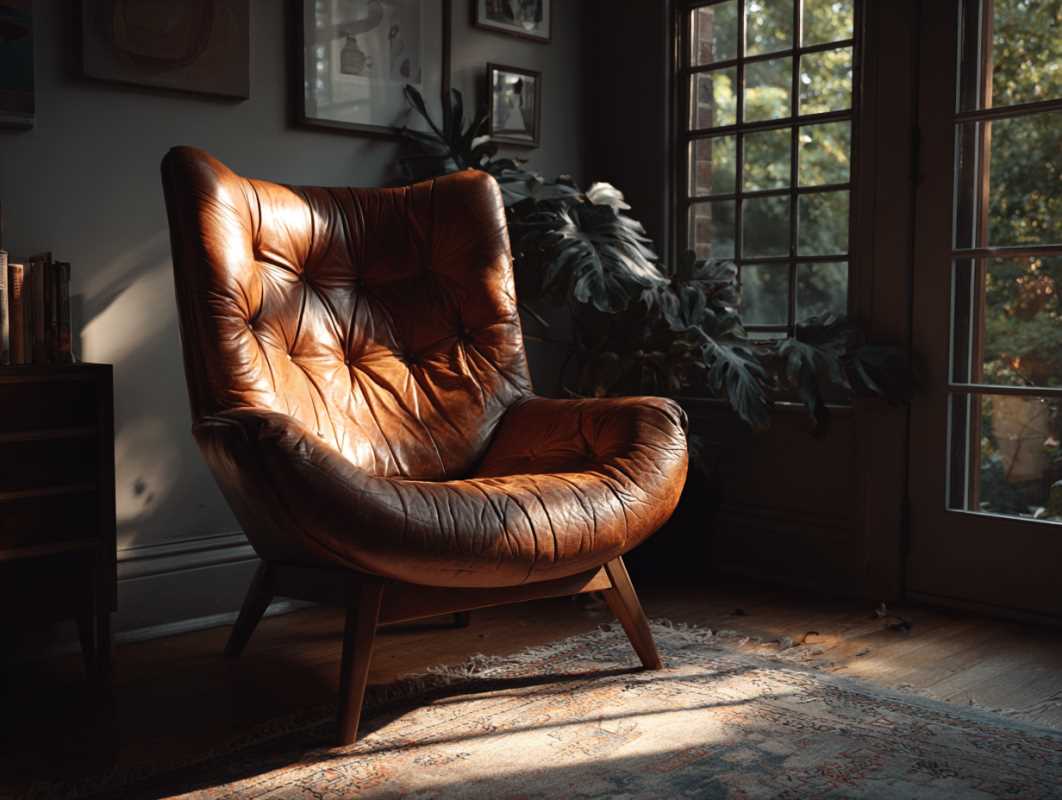
 (Image source: Midjourney)
 Growing up, your parents or teachers probably nagged you about sitting up straight, and you may have taken that advice all the way to your first job interview. But why do we do it? While the consequences don't really exist when we are kids, it's about much more than looking professional. Sitting up straight to maintain good posture helps prevent chronic pain, especially later in life. Your body is constantly adapting to the surfaces it rests on, and if your furniture isn't designed to support your natural alignment, you're fighting an uphill battle against gravity every single day. Investing in posture-correcting furniture can help strengthen your core, prevent chronic pain, boost your energy levels, and protect your spine for decades to come. Let's explore how the right furniture can transform your health from the ground up.
The Hidden Cost of "Bad" Furniture
You might not realize it, but that overly squishy sofa or that rigid dining chair you use for working from home could be silently sabotaging your health. When furniture lacks proper support, your body has to compensate. Muscles tighten up to hold your spine in place, ligaments get overstretched, and joints endure uneven pressure.
This constant compensation leads to what experts call "postural stress." Initially, it just feels like fatigue. Maybe your lower back is a little sore, or your neck feels stiff. But over months and years, this stress can remodel your body's structure. Shoulders roll forward permanently, the natural curve of the lower back flattens or deepens too much, and hips become chronically tight. The good news? You can reverse this by choosing furniture that does the work for you.
Ergonomic Chairs: The First Line of Defense
If you spend any significant amount of time sitting, an ergonomic chair is non-negotiable. But what actually makes a chair "posture-correcting"? It’s not just about having a lot of levers and knobs; it’s about dynamic support.
Active Sitting vs. Passive Sitting
Standard office chairs often encourage passive sitting, where you slump into the backrest and disengage your core. Posture-correcting chairs promote "active sitting." This means the chair moves with you.
Look for chairs with a "synchro-tilt" mechanism. When you lean back, the seat pan and the backrest move in a coordinated way, opening up your hip angle while keeping your feet flat on the floor. This encourages small, micro-movements throughout the day, keeping your core muscles slightly engaged and preventing stiffness.
Saddle Chairs and Stools
For a more aggressive approach to posture correction, consider a saddle chair. These stool-like seats are shaped like a horse saddle (hence the name). They force your hips into an open angle of about 135 degrees, compared to the 90-degree angle of a standard chair.
This open hip angle naturally rotates your pelvis forward, which automatically aligns your spine into its natural "S" curve. It’s almost impossible to slouch in a saddle chair because your body balance depends on staying upright. It takes some getting used to, but it does wonders for hip flexibility and lower back strength.
Kneeling Chairs: A different Angle on Comfort
Kneeling chairs look strange—like a piece of modern art rather than furniture—but they are fantastic tools for realigning the spine. The design drops your knees below your hips and places your shins on padded rests.
By shifting your weight between your bottom and your shins, a kneeling chair eases the pressure on your lower back (lumbar spine). It opens up the hips and encourages an upright posture without the need for a backrest.
A Word of Caution: Kneeling chairs aren't meant for eight-hour marathons. Because they put pressure on your shins and keep your legs in a folded position, they can restrict circulation if used for too long. They are best used as a secondary chair to switch into for an hour or two at a time to give your back a break.
Sit-Stand Desks: Breaking the Cycle
While not a chair, the sit-stand desk is a crucial piece of posture furniture. The human body is designed for movement, not for staying in one position—sitting or standing—for hours on end.
The Posture Reset
The real magic of a standing desk is the transition. Every time you switch from sitting to standing, you reset your posture. You engage your glutes, stretch your hip flexors, and re-align your spine.
When standing, ensure your monitor is at eye level so you aren't looking down. Use an anti-fatigue mat to cushion your feet and encourage subtle weight-shifting. This prevents your knees from locking and keeps the blood pumping back up from your legs.
The Living Room Trap: Sofas and Recliners
We focus a lot on office furniture, but we often ruin our posture the moment we clock out. That deep, plush couch that swallows you whole? It’s a posture nightmare.
Why "Sink-In" Softness hurts
When a sofa is too soft or too deep, your pelvis tilts backward (posterior pelvic tilt). This rounds your lower back into a "C" shape, reversing its natural curve. This puts immense pressure on your spinal discs.
Choosing a Supportive Sofa
To protect your back while you relax, look for firmer cushions that don't let you sink in more than an inch or two. The seat depth should allow you to sit with your back against the cushion while your feet are flat on the floor. If your legs dangle, your lower back takes the strain.
If you love your current squishy couch, use props. Place a firm throw pillow behind your lower back to maintain that natural curve, and use an ottoman to support your feet, taking the weight off your thighs.
Sleep Surfaces: Posture Correction Overnight
You spend roughly a third of your life in bed. If your mattress doesn't support your spine, you are spending eight hours a night in bad posture. A mattress that is too soft allows your hips to sink too far down, twisting your spine. A mattress that is too hard pushes against your pressure points, forcing your spine out of alignment to find comfort.
The Alignment Test
Your goal is a neutral spine. If you sleep on your side, your spine should form a straight horizontal line from your neck to your tailbone. If you sleep on your back, the mattress should fill the gap in your lower back without pushing it up.
Hybrid mattresses, which combine coils for support with foam for contouring, are often great for maintaining this balance. Adjustable bed bases are also gaining popularity as "posture furniture." Elevating the feet slightly can relieve pressure on the lower back, while elevating the head can help with neck strain and even snoring.
Accessories That Make a Difference
Sometimes, you don't need to replace all your furniture. Small, strategic accessories can upgrade your existing setup.
Footrests
If you are on the shorter side, standard desks and chairs might be too high for you. A footrest is essential. It brings the floor to you, allowing you to sit with your knees and hips at proper angles. This prevents you from sliding forward in your chair to reach the floor, a habit that ruins lumbar support.
Monitor Arms
We mentioned looking down at screens, but what about looking sideways? If you use dual monitors, they need to be positioned correctly to prevent neck twisting. Articulating monitor arms allow you to pull screens closer, push them back, or rotate them effortlessly. This ensures your "furniture" adapts to your eyes, rather than your neck adapting to the table.
Laptop Stands
Laptops are ergonomic disasters by design. The keyboard and screen are too close together. You either have to hunch to type or crane your neck to see. A simple laptop stand that raises the screen to eye level, combined with an external keyboard and mouse, turns any table into a posture-friendly workstation.
Building Habits Around Your Furniture
Here is the most important takeaway: Furniture supports posture, but it doesn't fix it automatically. You have to actively use the support provided.
If you buy a $1,000 ergonomic chair but still sit on your leg or hunch forward toward the screen, the chair can't help you. Posture-correcting furniture is a tool. It creates the potential for good alignment.
The "Check-In" Routine
Set a mental trigger. Every time you sit down, do a quick scan:
- Feet: Are they flat?
- Hips: Are they all the way back in the chair?
- Spine: Is my lower back touching the support?
- Shoulders: Are they relaxed and down, not up by my ears?
Long-Term Health Benefits
The payoff for upgrading your furniture and your habits is huge. Proper alignment reduces wear and tear on your joint surfaces, which can stave off arthritis. It prevents the muscle imbalances that lead to tension headaches and jaw pain.
Better posture even helps your internal organs. When you don't slouch, your lungs have more room to expand, improving your oxygen intake. Your digestive system isn't compressed, which can help with digestion.
The information provided on StayHealthyAndWell is intended for general informational and educational purposes only. Content on this website is not a substitute for professional medical advice, diagnosis, or treatment.
StayHealthyAndWell is not operated by licensed dietitians, registered nutritionists, physical therapists, personal trainers, or medical professionals. Any nutrition, fitness, exercise, or wellness information shared on this site is based on general knowledge, research, and personal perspectives, and should not be interpreted as personalized health or fitness advice.