Have you ever caught yourself staring at your phone after a ten-hour workday, totally exhausted, yet unable to relax? Most of us default to passive screen time when our brains feel fried. You tell yourself you are unwinding, but an hour later, you feel just as jittery and drained as when you logged off.
Real rest does not happen by shutting down your brain like a laptop. It happens when you give your mind something playful and engaging to focus on instead.
The Science Behind Why We Need to Play
Finding joy in play is a biological requirement, not an indulgence you earn after clearing your inbox.¹ When you become absorbed in an activity that has nothing to do with your job, your brain changes gear.
Most everyday anxiety is driven by the Default Mode Network, the brain network responsible for rumination, second-guessing yourself, and replaying awkward conversations. Immersive hobbies switch off that repetitive internal chatter. They redirect your attention toward the Executive Control Network, which handles the present moment. You give your threat-detection centers a genuine break.
The biological effects are immediate. In clinical trials, just 45 minutes of hands-on art-making reduced salivary cortisol levels in 75% of participants, regardless of their artistic talent or experience.² A massive longitudinal study tracking 93,263 adults across 16 countries found that having a hobby directly protects against age- and stress-related declines in mental health, with the strongest boost showing up in overall life satisfaction.³
So what does this mean for your daily routine? When you paint, bake, or strum a chord, you flood your system with dopamine and clear out lingering stress hormones. Your brain breathes a sigh of relief.
Embracing Low-Pressure Creativity
Why do so many adults abandon hobbies? The perfectionism trap usually takes the blame. We live in an era where people feel intense pressure to monetize their pastimes, start an Etsy shop, or produce gallery-ready art for social media.
Low-pressure creativity means focusing entirely on the process instead of the final result. You permit yourself to make something ugly, messy, or completely pointless.
If you want an easy entry point, try one of these low-barrier activities
• Adult coloring books: Filling in pre-drawn geometric patterns removes decision fatigue while keeping your hands pleasantly busy.
• Stream-of-consciousness journaling: Writing three pages of unfiltered thoughts every morning clears mental clutter without any rules on grammar or structure.
• Abstract doodling: Grabbing a ballpoint pen and making repetitive geometric shapes or Zentangles lets your brain drift into a meditative state.
• Collage work: Tearing up old magazines, ticket stubs, and wrapping paper to glue onto cardboard gives you tactile feedback without the intimidation of a blank canvas.
According to data from the American Psychiatric Association, 46% of adults use creative activities to relieve anxiety. People reporting excellent mental health are far more likely to engage in weekly creative outlets than those struggling with high stress. The secret is keeping the stakes low. You do not need to be talented to feel calm.
Making Time for It: Practical Approaches for Busy Schedules
Finding free time in 2026 often feels like an impossible puzzle. Between work demands, family duties, and chores, an uninterrupted two-hour block of free time is rare.
The good news is that you do not need hours. You only need a micro-hobby.
Think of a micro-hobby as 15-minute pockets of dedicated play. Neurocognitive research shows that recreational reading for just five minutes can drop acute stress levels by up to 20%. Ten minutes of finger-picking a guitar or watering balcony herbs produces a similar mental reset.
Here is how you can protect that time
• Schedule play like an appointment: Block out 15 minutes on your digital calendar and treat it with the same respect as a client call.
• Lower the setup barrier: Keep your supplies visible and ready. If your watercolor paints are packed in a closet behind three boxes, you will never open them. Keep a sketchbook and pencil right on your coffee table.
• Swap one scrolling cycle: Check your screen-time tracker. Trade just one 15-minute social media binge for your creative outlet.
Diverse Outlets for Every Personality
The best hobby is the one that pulls you into a flow state, that magical zone where self-consciousness disappears and time flies by. Because different minds unwind in different ways, it helps to match your outlet to your natural temperament.
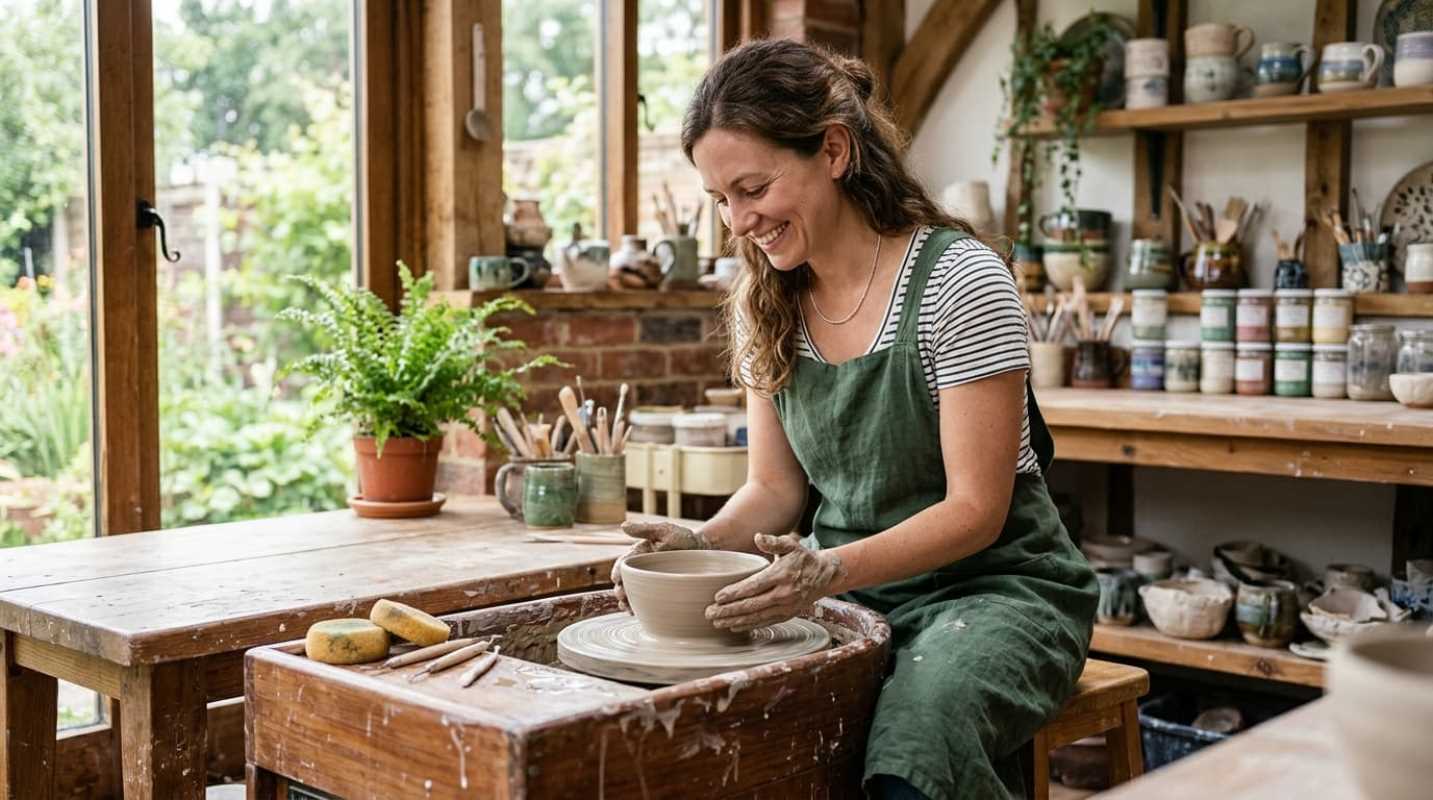
• Tactile and analog creating: If you stare at screens all day, tactile hobbies like pottery, knitting, wood-carving, or embroidery ground your senses. The bilateral hand movements naturally signal safety to your nervous system.
• Living and green hobbies: Gardening, repotting houseplants, or foraging give you sensory contact with nature. Working with soil exposes you to beneficial microorganisms that can trigger mood-lifting serotonin release.
• Structured cognitive play: If your mind resists sitting still, lean into structured challenges like chess, cryptic crosswords, jigsaw puzzles, or casual programming. They capture your analytical energy and channel it into solvable problems with clear rewards.
• Social and expressive movement: If isolation feeds your stress, join a community choir, a local salsa class, or an amateur pickleball league. Shared rhythm creates a sense of belonging that solitary rest cannot match.
Long-Term Well-Being and Sustaining Your Passion
Building a regular creative practice builds emotional resilience over time. When work hits a rough patch or personal stress spikes, your hobby acts as an anchor. It reminds you that your worth is not tied exclusively to your job performance or your household productivity.
To keep your hobby enjoyable across months and years, avoid rigid expectations. You do not have to practice every single day, and you do not have to stick with the same routine forever. Many people cycle through passions with the seasons, tending vegetables in spring, running road races in autumn, and knitting sweaters in winter.
When an activity starts feeling like another chore on your to-do list, pause and adjust. Step away for a week or pick up a completely different craft. Leisure should restore your energy, not deplete what little you have left. Give yourself the freedom to play, experiment, and make a glorious mess along the way.
Sources:
1. Hobbies Aren't a Luxury
https://latitudepsychology.com/hobbies-arent-a-luxury
2. Why Hobbies Are Good for Your Mental Health
https://mhanational.org/resources/why-hobbies-are-good-for-your-mental-health/
3. Hobby Engagement and Mental Health in 16 Countries
https://pubmed.ncbi.nlm.nih.gov/37696932/
*This article on Katiently is for informational and educational purposes only. Readers are encouraged to consult qualified professionals and verify details with official sources before making decisions. This content does not constitute professional advice.*