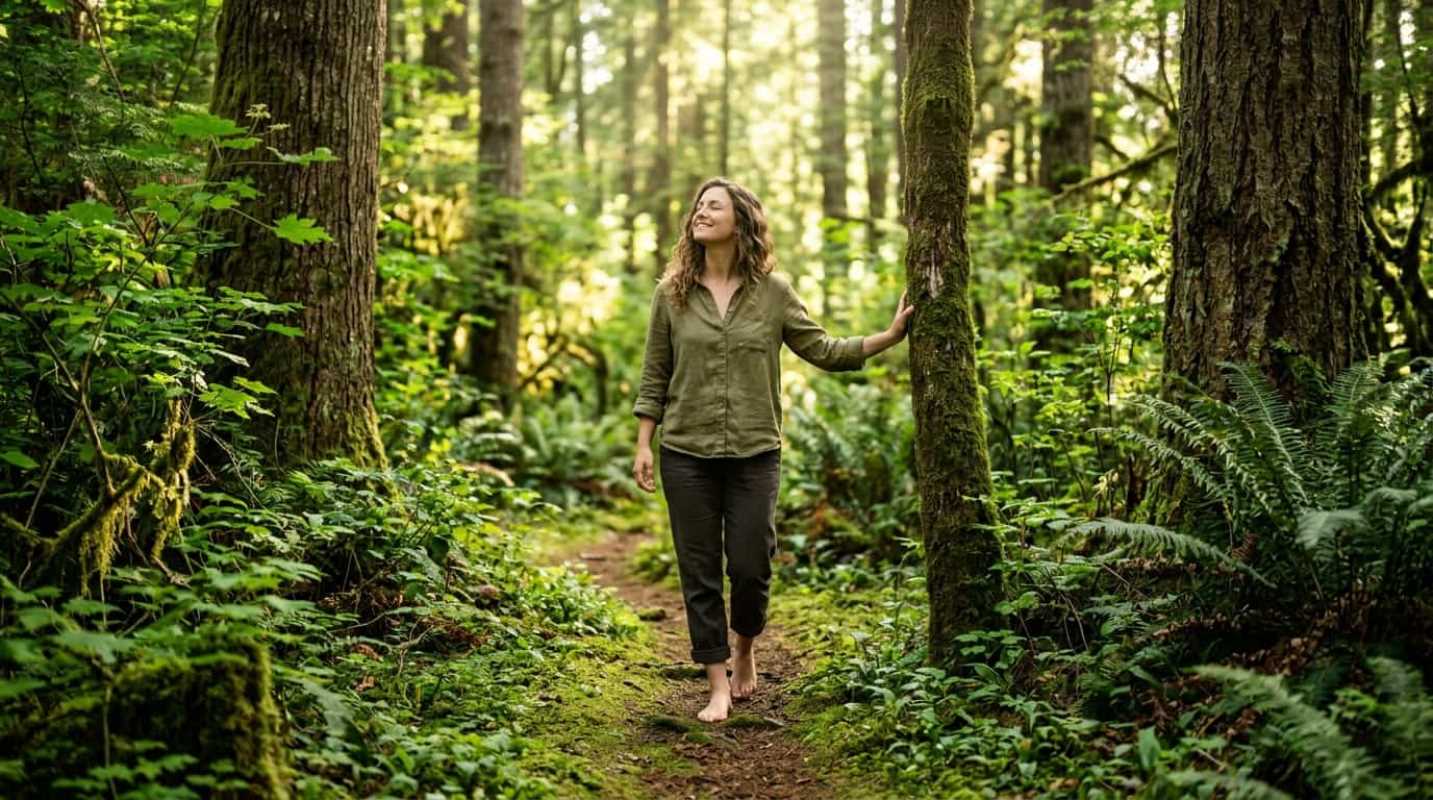
How much of your day do you spend staring at glowing glass? If you are like most people, the answer is probably uncomfortable. Between fluorescent office fixtures, dual monitor setups, and the smartphone screens that tuck us into bed, we have built daily routines almost entirely sealed off from the outdoors.
We often treat time outside like an indulgence, a weekend hobby, or a vacation reward. But your body does not view fresh air as optional. Biologically speaking, you were built to move under open skies, notice shifting leaves, and breathe air filtered by living plants. When you cut yourself off from those inputs, your body and mind quickly feel the strain.
Recent clinical data confirms what your intuition already knows. Step outside into green space, and your pulse stabilizes, your nervous system dials back its internal alarm, and mental chatter quiets down. Spending time in natural environments is simple, effective preventative medicine.
The Science Behind the Calm and Mental Health
Have you ever stepped into a quiet park after a chaotic work call and felt your shoulders drop immediately? That is not your imagination. It is your prefrontal cortex finally catching its breath.
In a study published in Scientific Reports, researchers placed mobile EEG caps on participants to track electrical brain activity during walks. Urban walkers stayed in a state of high vigilance, dodging foot traffic, avoiding cars, and constantly filtering visual clutter. But when people walked through natural green settings, their brains shifted into a state known as soft fascination. Nature gently holds your attention without demanding aggressive cognitive effort, giving your brain's executive control network a chance to recharge. Just make sure to keep your phone in your pocket. Glancing down at notifications ruins the neurological reset.
That mental lift shows up in broad clinical records, too. Researchers at the Texas A&M University School of Public Health tracked urban areas using an AI-based NatureScore system.¹ Neighborhoods with healthy tree canopies, accessible parks, and less ambient noise had significantly fewer residents requiring professional psychiatric care, along with lower rates of clinical anxiety and depression.
You do not need to hike backcountry wilderness trails for hours to get this relief. Clinical trials analyzing green exercise show that a modest routine delivers reliable results
• Session length: Keep sessions under 20 minutes for maximum efficiency.
• Frequency: Aim for at least 3 outdoor sessions each week.
• Intensity level: Stick to low or moderate movement, like a steady walk.
Physical and Moving Your Body Where It Belongs
The perks of green spaces extend far beyond your mood. Your heart, immune cells, and even your cellular age respond directly to natural surroundings.
When you walk through a grove of trees, you inhale airborne compounds called phytoncides. Double-blind trials show that inhaling real forest air triggers an immediate drop in Interleukin-6, a pro-inflammatory protein tied to cardiovascular issues, autoimmune flares, and chronic fatigue. At the same time, direct contact with soil and diverse plant life exposes you to natural airborne microbes that help train your immune system.
Your cardiovascular system also benefits from vertical greenery. Researchers at the Harvard T.H. Chan School of Public Health analyzed over 350 million Google Street View images across the country to see how neighborhood plants influenced health over an 18-year period.² Living near mature street trees was associated with a 4% lower rate of cardiovascular disease. Interestingly, neighborhoods dominated by open, manicured lawns saw a 3% to 6% increase in heart disease. Manicured grass often comes with synthetic pesticide runoff, high heat reflection, and zero protective shade. The physical architecture of the greenery matters.
Living near natural features also keeps your arteries healthier. Long-term cardiovascular data from the CARDIA cohort revealed that people living close to rivers and urban greenways had significantly lower odds of coronary artery calcification in middle age.³ In historically underserved neighborhoods, convenient access to green and blue spaces cut the odds of arterial calcification by 32%. Studies on cellular longevity even show that people living in neighborhoods with rich tree canopies have biological ages up to 2.5 years younger than their chronological age.
Get outside early in the morning, and the natural sunlight helps synchronize your internal clock, giving you deeper sleep and steadier daytime energy.
Integrating Green Space in Daily Life
Knowing the research is one thing. Carving out outdoor hours while managing meetings, family obligations, and chores is where reality hits.
Urban planners often refer to the "3-30-300" benchmark. Ideally, you should be able to see 3 trees from your window, have 30% tree canopy across your neighborhood, and live within 300 meters of a park. Yet only about 13.5% of city residents currently live in areas that meet all three conditions. If your neighborhood has more concrete than canopy, you have to be intentional about your outdoor exposure.
Fortunately, mental health gains follow a predictable pattern. Large-scale clinical meta-analyses show that the benefits of green time rise steadily until you hit roughly 120 minutes per week. After two total hours across seven days, the physical and cognitive returns level off.
Think of nature as a needed weekly habit
• Take daily micro-breaks: Spend 10 to 15 minutes sitting on a park bench or strolling through a courtyard during your lunch hour to reduce stress hormones.
• Hit the weekly target: Reach your two-hour goal by taking your weekend reading to a public garden or picking a dirt trail over a paved running track.
• Engage your senses: Leave your earbuds behind once or twice a week so your brain can register the sound of moving water, wind, and wildlife.
Easy Ways to Get Outdoors Without the Hassle
You do not need expensive gear or a national park pass to make this work. The trick is substituting indoor habits with outdoor ones wherever you can.
Try these low-barrier adjustments to boost your fresh air intake
• Walking meetings: Take one-on-one calls or informal check-ins on foot around the block instead of sitting at a desk.
• Al fresco meals: Eat your breakfast, lunch, or evening snack on your porch, balcony, or a nearby patch of grass.
• Container gardening: Keep potted herbs or native perennials on your windowsill or doorstep so you interact with living soil every day.
• Greener commuting: Add five minutes to your walk to cut through a neighborhood park rather than walking along an exhaust-heavy road.
Stop treating fresh air like a special occasion. When you treat the outdoors as a non-negotiable part of your schedule, your overall energy shifts quickly.
Reclaiming Your Connection to the Wild
Modern life pushes you into climate-controlled boxes. You wake up in a box, travel inside a metal box, work inside an office box, and relax in front of an entertainment box. It is convenient, but it runs counter to how your body evolved to thrive.
Stepping outside breaks that cycle. It restores your focus, eases chronic physical tension, and quiets your nervous system. The natural world gives your biology the exact inputs it was built to process.
Start with one simple change today. Step away from your desk, head out the front door, and give yourself twenty quiet minutes under the open sky.
Sources:
1. Study: Green Space Improves Mental Health
https://stories.tamu.edu/news/2024/02/22/study-green-space-improves-mental-health/
2. Living Near Trees Linked with Lower Heart Disease Risk in Cities
https://hsph.harvard.edu/news/living-near-trees-linked-with-lower-heart-disease-risk-in-cities/
3. The Heart Health Benefits of Urban Green and Blue Spaces
https://news.feinberg.northwestern.edu/2024/07/12/the-heart-health-benefits-of-urban-green-and-blue-spaces/
*This article on Katiently is for informational and educational purposes only. Readers are encouraged to consult qualified professionals and verify details with official sources before making decisions. This content does not constitute professional advice.*