 (Image via
Have you ever wondered why you can comfortably sit on a leg press machine and push hundreds of pounds with ease, yet struggle to hoist your heavy carry-on bag into the overhead bin without a grunt and a twinge in your lower back? This disconnect happens because traditional gym machines often train muscles in isolation, whereas life demands that your muscles work together in a coordinated symphony. This is where functional movement training steps in, acting as the bridge between "gym strength" and "real-world capability," ensuring your body is not just a collection of showy muscles but a highly efficient machine ready for any challenge the road throws your way.
What Exactly is Functional Movement?
The term "functional fitness" gets tossed around a lot in magazines and Instagram captions, but let’s strip away the buzzwords and look at the science. At its core, functional movement training is about preparing your body for the specific activities you perform in daily life. It focuses on movements, not just muscles.
Think about the human body as a team of employees. In a bodybuilding approach, you might train each employee (muscle) separately in their own cubicle. The bicep does curls; the quad does extensions. But when a big project comes up—like sprinting to catch a train while dodging pedestrians—those employees need to communicate and collaborate instantly. Functional training tears down the cubicle walls. It trains the nervous system to coordinate multiple muscle groups across different joints to perform a task efficiently and safely.
The science behind this is rooted in neuromuscular coordination. Your brain doesn't think in terms of "contract left gluteus maximus." It thinks in terms of movement patterns: "step up," "lift bag," "twist and reach." Functional exercises mimic these patterns, reinforcing the neural pathways that make movement smoother and stronger.
The Seven Primal Movement Patterns
To understand functional training, you have to understand the foundational movements the human body was designed to perform. Scientists and coaches generally agree on seven "primal" patterns. Every complex action you take on a trip—from kayaking to hiking—is essentially a combination of these seven basics.
1. Squat
This is the simple act of sitting down and standing up. You do this every time you get in and out of a taxi, sit on a low stool at a street food stall, or crouch down to tie your hiking boots.
- The Science: Squats recruit the largest muscles in the body—quads, hamstrings, and glutes—while demanding core stability to keep your torso upright.
2. Lunge
Lunging is a single-leg movement that mimics walking, running, and climbing stairs.
- The Science: Unlike the squat, the lunge requires significant balance and stability because your base of support is split. This mirrors the uneven terrain you might face on a trek in Nepal or the wobbly steps of an ancient ruin.
3. Push
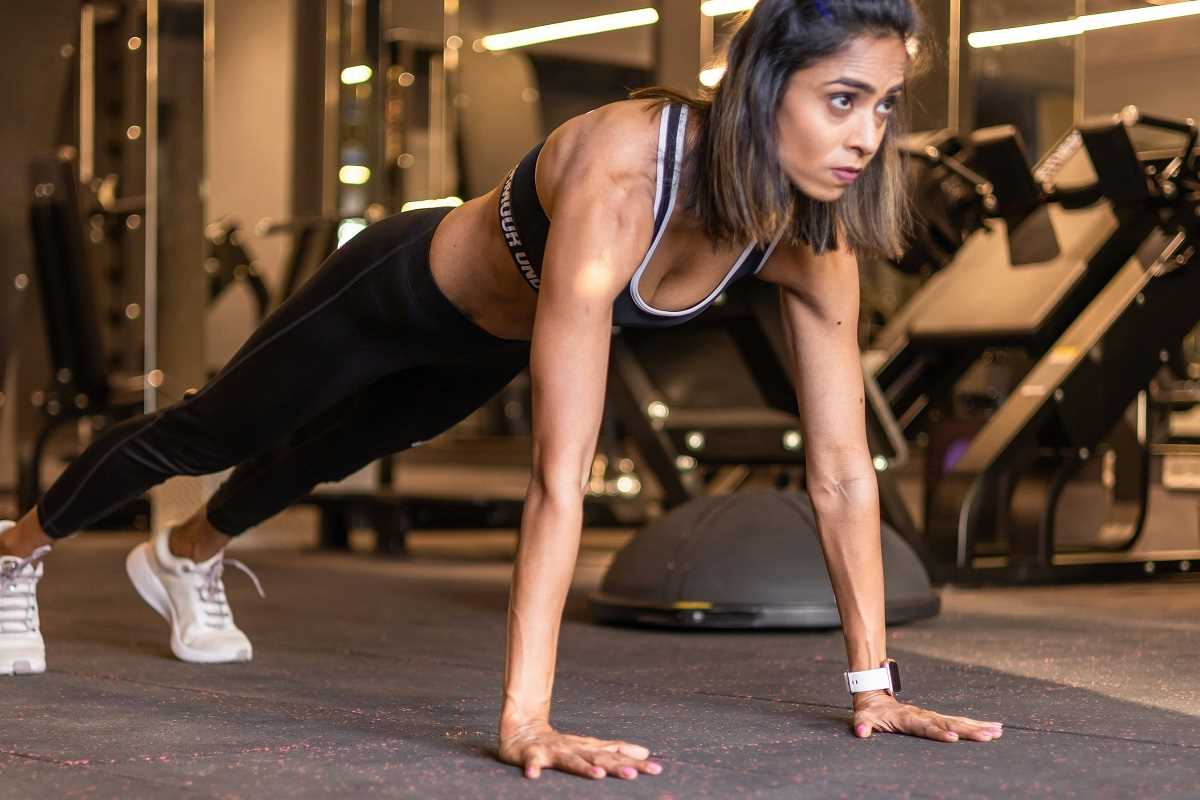
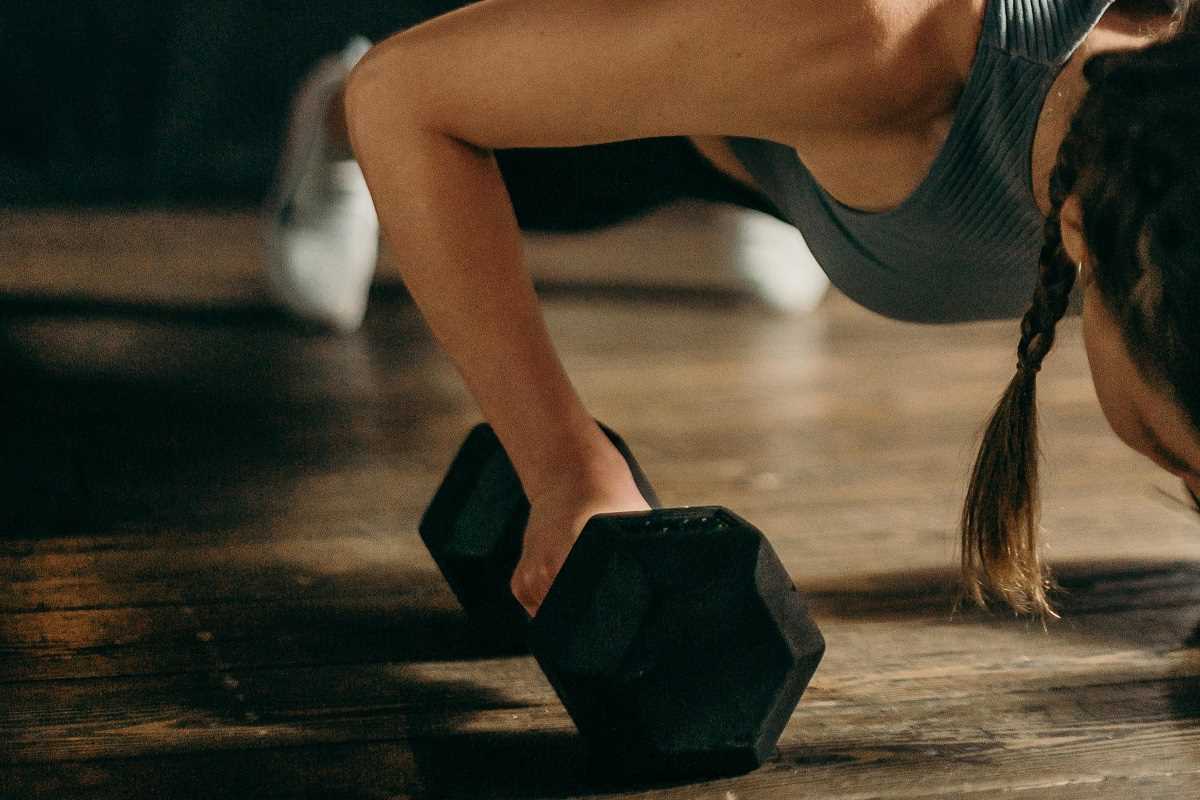
This involves pushing weight away from your body, either horizontally (like a push-up) or vertically (like lifting a backpack over your head).
- The Science: Pushing engages the chest, shoulders, and triceps, but functional pushing also requires the core to brace so you don't arch your back and lose power.
4. Pull
The opposite of the push, this involves pulling weight toward you. Think about starting a lawnmower, opening a heavy door, or dragging a suitcase over a curb.
- The Science: Pulling is crucial for posture. It strengthens the back muscles (lats and rhomboids), counteracting the "slump" many of us develop from sitting on planes and buses.
5. Hinge
This is perhaps the most misunderstood yet vital movement. A hinge involves bending at the hips while keeping a flat back, like picking up a heavy box from the floor.
- The Science: The hinge loads the "posterior chain"—the hamstrings and glutes—rather than the lower back. Mastering this pattern is the single best way to prevent the back injuries that ruin vacations.
6. Rotation
Life happens in 360 degrees. You twist to grab a seatbelt, swing a golf club, or turn to talk to someone walking beside you.
- The Science: Rotational power comes from the hips and thoracic spine (upper back), not the lower back. Functional training teaches you to generate force through your core to rotate safely.
7. Gait (Walking/Running)
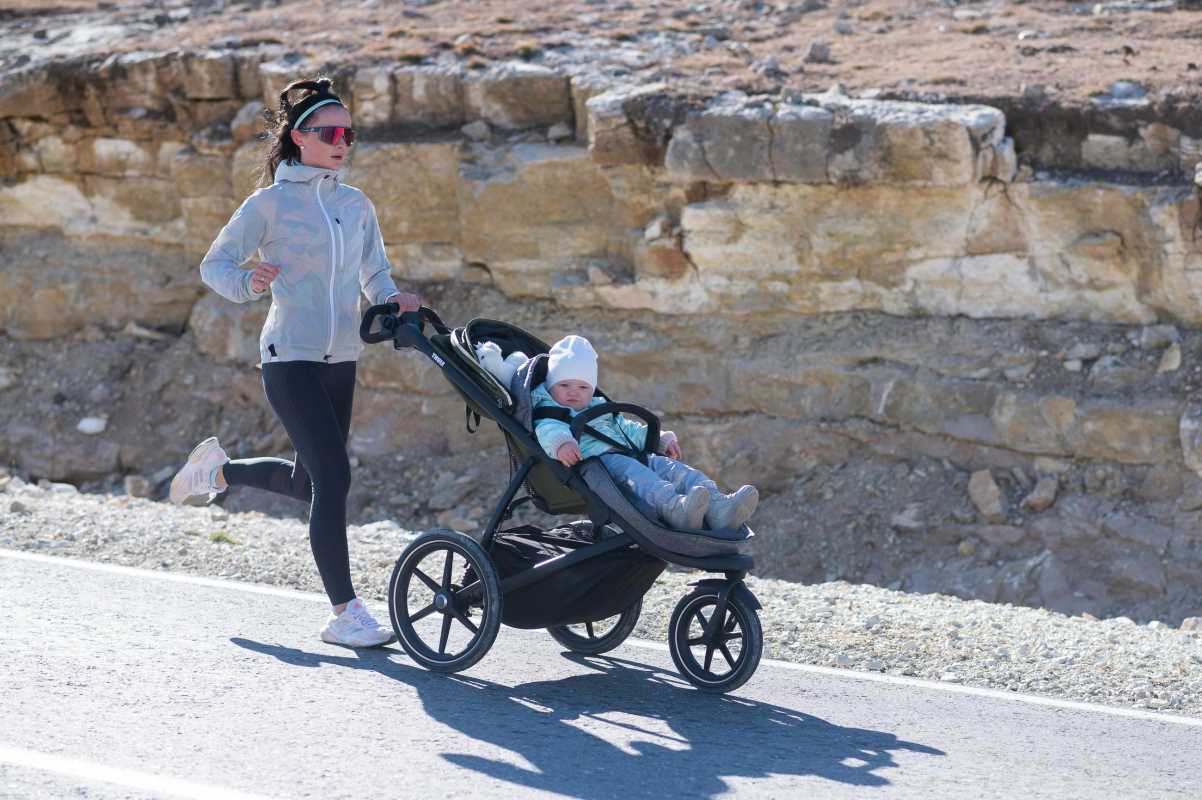
The most fundamental human movement. It involves moving through space.
- The Science: Gait is a complex series of falling and catching yourself. It requires the coordination of every other pattern—a little rotation, a little lunging, a stable core—all happening in split seconds.
Why Isolation Machines Fail the Traveler
Let's go back to that leg press machine. When you sit on it, the machine stabilizes the weight for you. You don't have to balance; you just have to push. While this makes your quads stronger, it does nothing for the stabilizer muscles around your hips and knees.
Now, imagine you are hiking down a steep, rocky trail in Patagonia. You step on a loose rock. Your quad is strong enough to hold you, but because you haven't trained your stabilizers (the small muscles that fine-tune joint position), your knee wobbles, and you risk a sprain.
Functional training uses "free weights" (dumbbells, kettlebells) or body weight, forcing you to be your own machine. You have to stabilize the load yourself. This activates proprioceptors—sensory receptors in your joints and muscles that tell your brain where your body is in space. Enhanced proprioception means better balance, quicker reactions, and fewer rolled ankles on cobblestone streets.
The Role of the Core: Stability vs. Vanity
In the world of functional science, "core" does not mean a six-pack. Your core is a cylinder of muscles that wraps around your torso, including your abs, obliques, lower back, and even your diaphragm.
The primary function of the core isn't to do crunches; it is to resist movement. It acts as a transmission system, transferring power from your legs to your arms while protecting your spine.
Think about putting that heavy bag in the overhead bin again. You lift with your legs and push with your arms. Your core's job is to stay rigid so that the power doesn't leak out through a wiggly spine. If your core is weak (or if you only trained it by doing sit-ups), your back might hyperextend under the weight, leading to injury. Functional exercises like planks, farmer's carries (walking with heavy weights), and Pallof presses train the core to be a sturdy, protective brace.
Multi-Planar Training: Getting Out of the Straight Line
Most traditional exercises happen in the sagittal plane—moving forward and backward (running, curling, squatting). But the world is three-dimensional. Travelers need to move in the frontal plane (side-to-side) and transverse plane (rotation).
- Frontal Plane Scenario: You’re on a crowded subway in Tokyo. The train lurches sideways. To stay upright, you need lateral stability—strength in the muscles on the sides of your hips (glute medius). A side lunge trains this; a regular squat does not.
- Transverse Plane Scenario: You’re kayaking in a fjord. Each stroke requires you to twist your torso against the resistance of the water. This is rotational strength. A woodchop exercise with a cable machine mimics this perfectly.
By training in all three planes, you build a body that is resilient from every angle, not just when moving in a straight line.
How to Build a Functional Routine for Travel
You don't need a degree in kinesiology to apply this science. You just need to shift your focus from "muscles" to "movements." Here is a simple framework to make your workouts more functional and travel-ready.
1. Focus on Compound Movements
Ditch the bicep curls and leg extensions. Choose exercises that use multiple joints at once. Squats, deadlifts, push-ups, and pull-ups give you more bang for your buck and teach your body to work as a unit.
2. Embrace Unilateral Training
Real life is rarely symmetrical. You carry a bag on one shoulder; you hike with one foot in front of the other. Train one side at a time.
- Instead of a two-legged squat, try a Bulgarian Split Squat (one foot elevated behind you).
- Instead of a bench press, try a Single-Arm Dumbbell Press.
- This forces your core to work double-time to keep you balanced, correcting imbalances between your left and right sides.
3. Incorporate Balance and Instability
You don't need to stand on a circus ball, but introducing minor instability helps.
- Do a shoulder press while standing on one leg.
- Use a suspension trainer (like a TRX) for rows or push-ups. The instability forces your joints to recruit those tiny stabilizer muscles.
4. Carry Heavy Things
This is the most "functional" exercise of all for a traveler. Pick up a heavy dumbbell or kettlebell in one hand (Suitcase Carry) or both hands (Farmer's Carry) and walk. Keep your posture perfect—tall spine, shoulders back. This builds grip strength for luggage, core stability for long days on your feet, and the mental grit to keep going when you're tired.
The Payoff: A Life Without Limits
The beauty of understanding the science of functional movement is that it changes your "why." You stop training just to see a number on a scale go down or a muscle get bigger. You start training so you can say "yes."
Yes to the impulsive hike to a hidden waterfall. Yes to the 500 steps up the cathedral tower. Yes to carrying your own gear across a sandy beach. Functional training builds a buffer of capability. It ensures that your physical fitness is never the limiting factor in your adventures. Instead of worrying about whether your back will hold up, you can focus on the breathtaking view in front of you. That is the ultimate freedom, and it starts with how you move.
The information provided on StayHealthyAndWell is intended for general informational and educational purposes only. Content on this website is not a substitute for professional medical advice, diagnosis, or treatment.
StayHealthyAndWell is not operated by licensed dietitians, registered nutritionists, physical therapists, personal trainers, or medical professionals. Any nutrition, fitness, exercise, or wellness information shared on this site is based on general knowledge, research, and personal perspectives, and should not be interpreted as personalized health or fitness advice.