Have you ever spent an entire week eating wholesome, homemade meals, only to feel your stomach drop when a friend suggests Friday dinner at that buzzy new bistro? You want to catch up, laugh over good food, and unwind. But in the back of your mind, a little voice whispers that one evening out will wreck your hard-earned progress.
It does not have to be that way.
The dining out trap is real, of course. Landmark research from Tufts University revealed that 92 percent of meals served at both large chain and independent restaurants exceed recommended single-meal calorie targets.¹ In fact, the average restaurant entree packs between 1,200 and 1,350 calories, and that sits on your plate before anyone even touches the bread basket, orders a cocktail, or glances at dessert.
Yet you don't need to live in a culinary bubble to stay fit. When you know how commercial kitchens operate and how menus communicate, you can eat out regularly while keeping your health goals completely on track.
The Mindset Shift of Dining Out as an Experience Instead of a Cheat Day
Most people approach a restaurant meal with one of two extremes. They either treat it as an all-out cheat day or they sit there feeling deprived while picking at a bowl of dry greens.
Neither works.
When you frame a restaurant meal as a cheat day, you slip into a scarcity mindset. You tell yourself, "I am blowing my diet anyway, so I might as well eat everything in sight." The next thing you know, you are stuffing down fried appetizers you do not even love, simply because they are on the table.
Flip that script. Treat dining out as a social experience and a sensory enjoyment, not an excuse to gorge. You are there for the ambiance, the conversation, and the joy of having someone else cook and wash the dishes. When you enter a dining room with a calm, confident plan, the food stops feeling like an uncontrollable hazard and becomes what it was meant to be: a great meal shared with people you like.
Mastering Menu Navigation Before You Even Arrive
Decision fatigue is real. If you wait until you are seated at a noisy table with a cocktail menu in hand, your willpower does not stand a chance. Research shows that diners routinely underestimate restaurant meals by up to 250 calories, and many underestimate by over 500 calories.²
Look up the menu on your phone an hour or two before you go. When you browse while you are calm and full, you can pick an entree with a clear head.
Look out for these common menu buzzwords
• Crispy, battered, and tempura: These tell you the food spent time submerged in hot cooking oil, easily adding 200 to 400 calories of cooking fat to your meal.
• Loaded, creamy, and au gratin: Kitchens use these terms to signal heavy cream, melted cheese, and extra butter.
• Glazed and sticky: These dishes often come packed with refined sugar, honey, or corn syrup masquerading as a savory sauce.
• Charred, grilled, and roasted: These are your green flags. They rely on direct heat and natural seasonings rather than heavy layers of fat.
• Steamed and braised: These cooking methods use water, light stock, or aromatic broths to keep meats and vegetables tender without drowning them in oil.
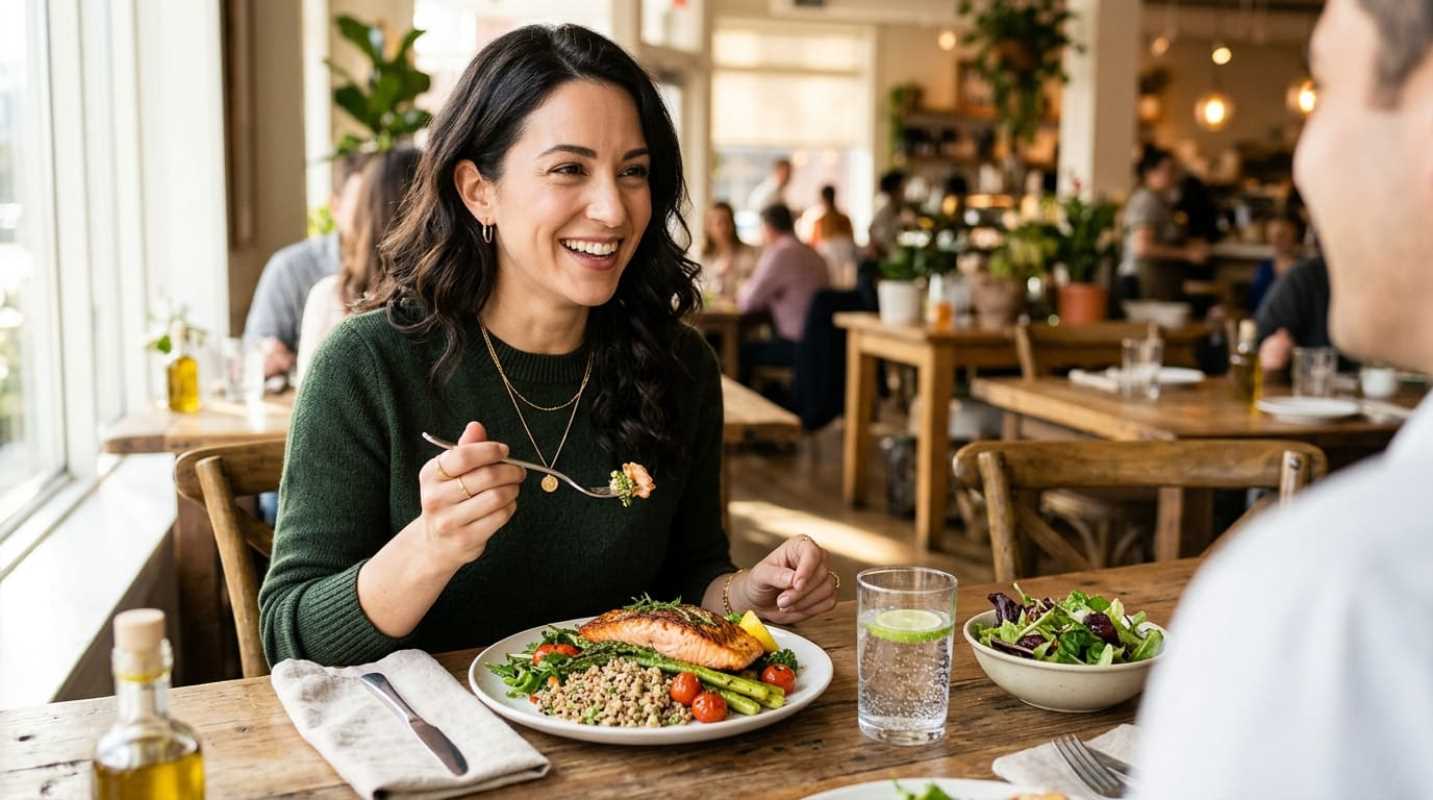
According to the National Restaurant Association, diners are increasingly prioritizing protein and nutrient-dense options.³ Build your order around lean protein and fiber first. If you secure a solid serving of salmon, sirloin, chicken, or tofu alongside a hefty serving of greens, you will walk away satisfied without feeling weighed down.
Smart Portion Approaches for Any Cuisine
Restaurant portions are inflated. Most establishments serve double or triple what a standard serving should be. Leaving portion control up to sheer willpower while staring down an overflowing plate rarely ends well.
Use these practical portion approaches
• The box-first habit: Ask your server to bring a to-go container right when your meal arrives. Transfer half the plate directly into the box before taking your first bite. You immediately remove the visual cue to clean your plate.
• The two-starter solution: Skip the main course altogether. Pair a broth-based soup or a house salad with a protein-heavy appetizer like grilled chicken skewers, shrimp cocktail, or seared scallops.
• The visual half-plate check: Aim to make half your plate non-starchy vegetables. Dedicate one-quarter to lean protein, and save the remaining quarter for complex carbohydrates like rice or potatoes.
• The plate-sharing play: Order a few flavorful plates for the whole table to share. You get to sample bold flavors without carrying the burden of finishing a massive single entree.
Practical Swaps and Requests That Actually Work
Many people feel self-conscious asking for substitutions. You might worry about annoying your server or looking high-maintenance.
Do not worry about it. Servers handle modifications constantly. The trick is keeping your requests simple, polite, and direct.
Ask for your dressing and sauces on the side. A standard two-ounce ramekin of creamy salad dressing packs upwards of 300 calories. If you pour it over the top, your healthy salad quickly matches the calorie profile of a cheeseburger. Instead, use the fork-dip method: dip your empty fork tines into the dressing first, then spear your lettuce. You get bold flavor with every bite while leaving three-quarters of the dressing behind.
Trade out the standard side of French fries for steamed broccoli, grilled asparagus, or a side salad tossed with vinegar. Swap white flour tortillas for corn tortillas when eating Mexican cuisine, which instantly cuts your sodium and calorie load in half. If you want a drink, skip sugar-packed margaritas and choose sparkling water with fresh citrus, dry wine, or a clear spirit mixed with soda water.
The Art of the Balanced Indulgence
Being excessively strict almost always backfires. If you force yourself to eat plain steamed vegetables while everyone else enjoys crusty sourdough and decadent desserts, you will likely end up raiding your pantry the moment you get home.
True balance comes from intentional choices. Pick your single non-negotiable indulgence for the night.
Is this place famous for its fresh pasta? Order the pasta, but skip the bread basket and pass on dessert. Are you dying to try the signature chocolate cake? Great. Choose a lean, grilled protein with greens for dinner so you can enjoy every bite of that cake guilt-free.
Follow the 80/20 principle. If 80 percent of what you consume nourishes your body with whole foods, lean proteins, and produce, that remaining 20 percent gives you room to enjoy life. Consistency over months and years matters far more than an extra splash of olive oil on a Friday night. Make your plan, enjoy the evening, and get right back to your regular routine the next morning.
Sources:
1. Tufts Researchers Find Meals at 92 Percent of Dining Establishments Tip Scales
https://now.tufts.edu/2016/01/20/tufts-researchers-find-meals-92-percent-dining-establishments-tip-scales-0
2. Calorie Content of Menu Items at Large Chain and Independent Restaurants
https://pmc.ncbi.nlm.nih.gov/articles/PMC3662831/
3. Health and Nutrition Trends Are Driving Industry Forward
https://restaurant.org/education-and-resources/resource-library/health-and-nutrition-trends-are-driving-industry-forward/
*This article on Katiently is for informational and educational purposes only. Readers are encouraged to consult qualified professionals and verify details with official sources before making decisions. This content does not constitute professional advice.*