It is 6:30 PM on a Tuesday. You walk through the front door, drop your bag, and feel your stomach rumble. When you open the refrigerator, all you see are random condiments, half an onion, and raw chicken breasts that will take an hour to thaw and cook.
Have you been there? Most of us have. That exact moment of mental fatigue is usually when you throw your hands up and open a delivery app.
Preparing meals from scratch every evening eats up an average of 37 to 51 minutes of your day.¹ Add clean-up time, and you lose nearly an hour every night just dealing with dinner. Meal prepping flips that script entirely. It gives you back your weeknights, cuts your cooking time by roughly 70 percent, and keeps you anchored to your health goals without turning your kitchen into a second job.
Mastering Your Weekly Planning Routine
Great meal prep starts long before you turn on an oven. If you head to the grocery store on Sunday without a clear game plan, you will end up buying too much food, forgetting key items, and tossing wilted produce into the trash by Friday.
Start by pulling up your calendar for the coming week. Do you have a late client dinner on Wednesday? Is your kid having a soccer game on Thursday night? Mapping your meals around your actual schedule stops you from cooking food you will never have time to eat.
Take inventory of what you already own before writing a grocery list. Check your pantry shelves and freezer drawers for grains, canned tomatoes, and frozen proteins. Building meals around ingredients you already have saves money and clears out clutter.
Keep your grocery shopping quick and disciplined with these simple habits
• Group by grocery section: Organize your shopping list by produce, proteins, dairy, and dry goods so you never have to backtrack across the aisles.
• Stick to digital checklists: Keep a running list on your phone throughout the week so you can add staples the moment you run out.
• Limit experimental recipes: Plan only one brand-new recipe per week. Fill the rest of your menu with familiar meals you can cook on autopilot.
Batch Cooking Basics for Beginners and Pros
The old-school bodybuilding method of meal prep, eating five identical plastic containers of dry chicken, steamed broccoli, and white rice, is a recipe for burnout. By Thursday, the thought of eating that same container makes you want to order takeout.
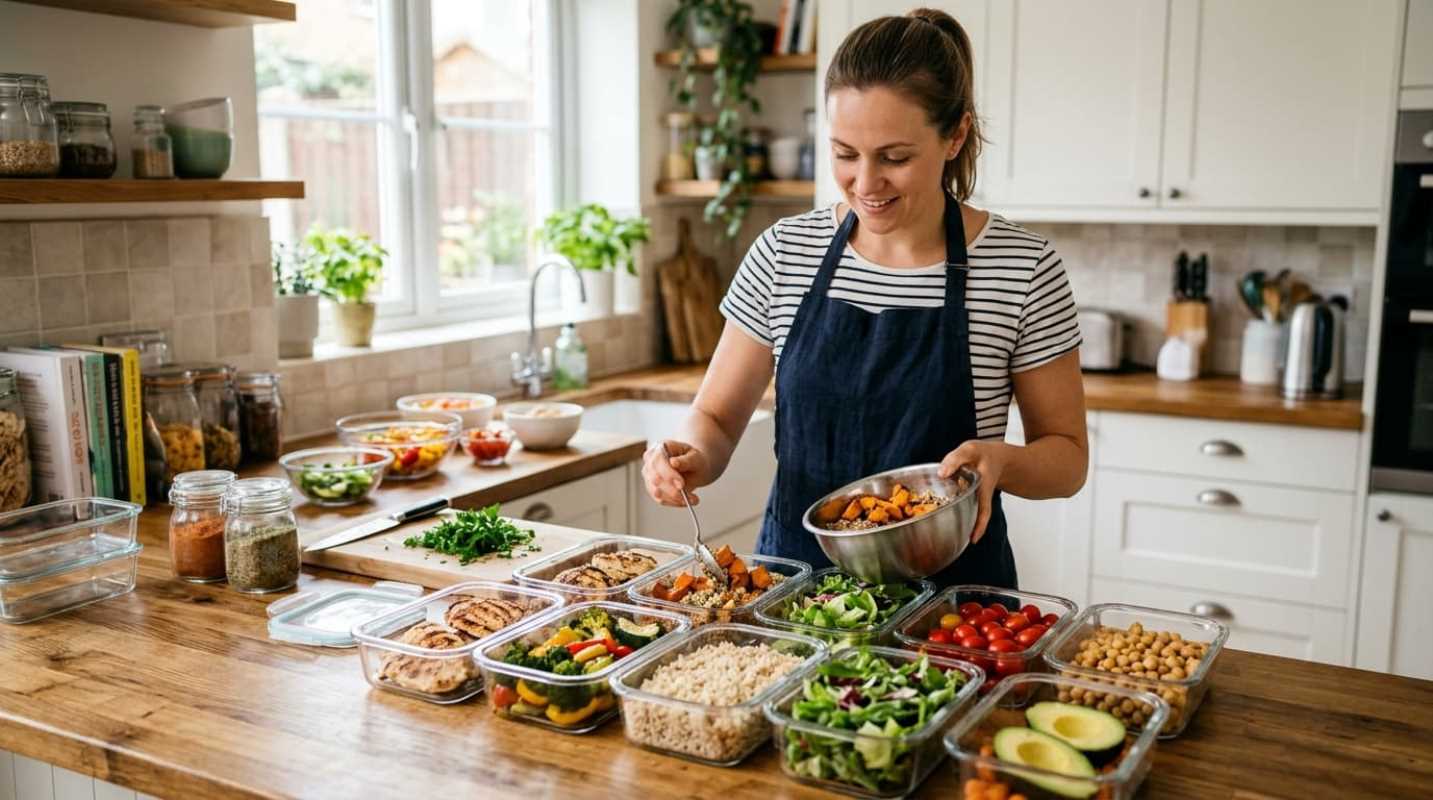
Component prepping is a much smarter approach. Instead of building full meals ahead of time, you cook versatile, separate building blocks in bulk. When dinner rolls around, you can mix and match these components into bowls, wraps, or stir-fries in under five minutes.
To build a modular prep system that lasts all week, focus on these core elements
• Two anchor proteins: Make one shredded or braised meat in a slow cooker, like salsa chicken, and cook a second roasted or seared protein, like spiced ground turkey or baked tofu.
• Two sheet pans of vegetables: Roast dense veggies like broccoli florets, sweet potato cubes, and Brussels sprouts at 400°F with olive oil, salt, and black pepper.
• One hearty grain base: Cook a large batch of brown rice, farro, or quinoa to serve as your foundation.
• Two distinct sauces: Whip up a garlic-lemon tahini sauce and a smoky chipotle vinaigrette to instantly change the flavor profile of the same base ingredients.
To get everything done in about 75 minutes, run your appliances in parallel. Slide your sheet pans into the oven, start your grains in a pressure cooker on the counter, and use your air fryer to crisp up a protein. Although the heat does the heavy lifting, use your cutting board to wash and chop fresh vegetables for quick salads.
The Art of Storage and Portioning
Cooking great food does not help much if it spoils or turns into a soggy mess by mid-week. Food safety standards dictate that cooked meats and prepared meals stay safe in a regular refrigerator for three to four days.²
If you cook a massive batch of food on Sunday afternoon, it reaches the end of its safe refrigerated shelf life by Wednesday night. This is where the Wednesday pivot comes in. Keep three days of meals in the fridge for Monday through Wednesday. Pack the portions for Thursday and Friday into freezer-safe containers and put them straight into the freezer on Sunday. On Wednesday evening, move those containers to the fridge so they thaw safely in time for dinner.
To keep your food tasting freshly made rather than like sad leftovers, apply these kitchen rules
• Use shallow containers: Cool hot food in containers that are less than two inches deep. Deep dishes trap heat in the center, keeping food in the bacterial danger zone for too long.
• Invest in borosilicate glass: Glass containers with snap-lock lids prevent food odors, clean easily, and go straight from the fridge into the microwave or oven without leaching chemicals.
• Add moisture barriers: Place a clean paper towel inside storage containers with pre-washed leafy greens to absorb condensation and stop greens from turning slimy.
• Label everything clearly: Use a piece of painter's tape and a permanent marker to write down the recipe name and prep date on every container you store.
Staying on Track When Life Gets Busy
Even the best routines hit speed bumps. An unexpected project deadline or an exhausting commute can wreck your dinner plans if you do not have a backup approach.
Keep a buffer meal in your freezer for high-stress days. Freezer dump bags work wonders here. Fill a silicone bag with raw sliced chicken, chopped bell peppers, onions, and fajita seasoning, then freeze it flat. On a lot of mornings, drop the frozen contents directly into your slow cooker. By dinner, you have hot, homemade fajita filling waiting for you without any chopping or active stove work.
Keep your meals interesting by switching up simple toppings. You can eat the same roasted sweet potatoes and ground beef on Monday and Thursday without feeling bored. Turn Monday's portion into a taco bowl with salsa and avocado, and transform Thursday's portion into a Mediterranean bowl with cucumber slices, feta cheese, and a spoonful of tzatziki.
Drop the expectation of perfection. If you run out of energy on Sunday and only manage to boil a dozen eggs and roast a tray of carrots, that is still a win. Any food you prep ahead of time makes your week easier than starting from scratch.
Start Small and Eat Well
You do not need an entire weekend or professional culinary training to build a working meal prep routine. Pick one single action to try this week. Cook double the amount of rice you need for dinner tonight, or roast an extra pan of vegetables while your oven is already hot.
Over time, these small habits compound into massive rewards. Regular home batch cooking can easily save you $100 to $170 each month by replacing unplanned takeout runs.³ More importantly, you buy back precious evening hours to rest, exercise, or spend time with family. Open your calendar, pick two proteins to cook this weekend, and take control of your weekly dinners.
Sources:
1. Americans Spend an Average of 37 Minutes a Day Preparing Food and Cleaning Up
https://www.ers.usda.gov/amber-waves/2016/november/americans-spend-an-average-of-37-minutes-a-day-preparing-and-serving-food-and-cleaning-up
2. Complete Meal Prep Guide for Busy Home Cooks
https://lovegreatfinds.com/blogs/news/complete-meal-prep-guide-busy-home-cooks
3. Navigating Inflation: How Meal Prep Helps Families Save Money
https://beehivemeals.com/blogs/trending-topics/navigating-inflation-how-meal-prep-helps-families-save-money
*This article on Katiently is for informational and educational purposes only. Readers are encouraged to consult qualified professionals and verify details with official sources before making decisions. This content does not constitute professional advice.*