Remember the fat-free craze of the 1990s? Snack aisles were packed with fat-free cookies and pastel-colored yogurts loaded with heaps of refined sugar to compensate for the missing texture. We were told that eating fat made you fat, plain and simple.
We got that completely wrong.
Decades of dietary confusion left people terrified of butter, oils, and egg yolks, all while chronic health issues climbed. Today, global health authorities like the World Health Organization urge adults to get between 20% and 35% of their daily energy from fats, specifically prioritizing unsaturated options over industrially produced trans fats and excess saturated fats.¹ Your body doesn't just tolerate good fat. It craves it.
The Fat Renaissance and Why Your Body Craves Them
Every single cell in your body depends on lipids for structural integrity. Think of fats as the mortar holding the bricks of your cellular walls together. Without them, your cell membranes become rigid and sluggish, making it harder for nutrients to enter and cellular waste to exit.
Fats also serve as the primary raw material for hormone synthesis. If you drastically strip fats from your plate, your endocrine system suffers. Sex hormones like estrogen and testosterone drop, while cellular signaling grinds to a halt. Fat-soluble vitamins, including A, D, E, and K, also need dietary lipids to be absorbed properly. You could eat a massive bowl of raw kale, but without a drizzle of oil, your body misses out on those fat-soluble micronutrients.
The key lies in separating the biological troublemakers from the nutritional heroes. Ultra-processed seed oils and hydrogenated trans fats oxidize easily when subjected to high heat, creating inflammatory compounds in the bloodstream. Whole, nutrient-dense fats calm inflammation and support daily cellular repair.
The Powerhouse Duo of Omega-3s and Monounsaturated Fats
For upgrading your diet, two types of fats run the show: omega-3 polyunsaturated fatty acids and monounsaturated fatty acids (often called MUFAs).
Omega-3s come in three primary forms. You have EPA and DHA from marine life, and ALA from plants. These fatty acids settle directly into brain tissue and vascular walls. Research across clinical populations shows that consistent omega-3 intake suppresses vascular inflammation and significantly cuts the odds of experiencing major cardiometabolic events.² Beyond cardiovascular health, high levels of circulating omega-3s are closely tied to long-term cognitive resilience, protecting delicate neurological pathways as you age.
Then you have monounsaturated fats, predominantly oleic acid. Unlike saturated fats, which can drive up atherogenic particles when consumed in excess, MUFAs help keep low-density lipoprotein (LDL) particles in check while maintaining high-density lipoprotein (HDL) function.
These two fats operate in tandem. When you replace processed carbs and trans fats with MUFAs and omega-3s, you lower systemic inflammation, keep blood vessels flexible, and help your cells respond efficiently to insulin.
Top-Tier Food Sources for Your Daily Intake
Adding healthy fats to your meals should feel delicious, not clinical. Focusing on whole-food options gives you protective vitamins, fiber, and trace minerals alongside every gram of lipid.
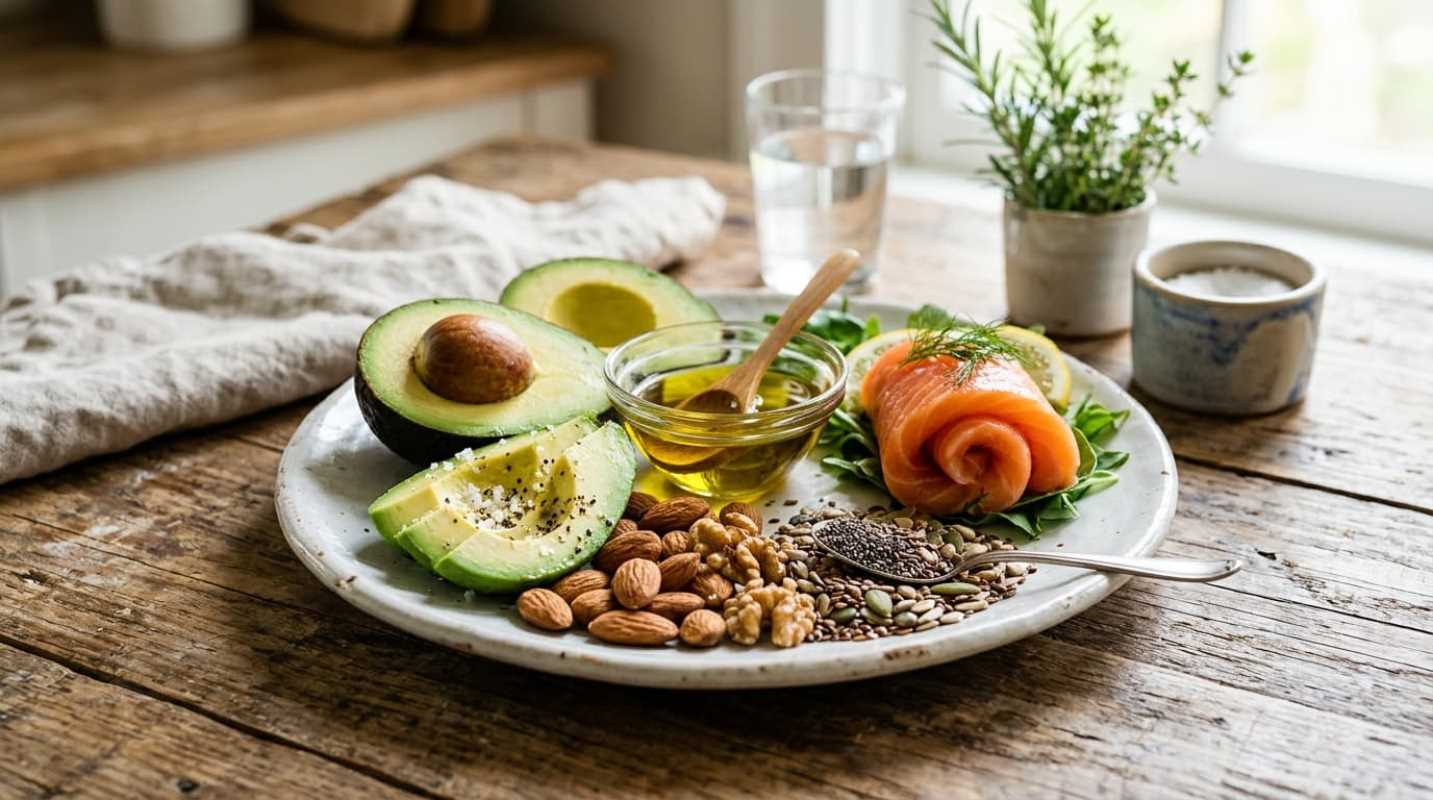
• Extra Virgin Olive Oil: Fresh-pressed olive oil is rich in oleic acid and loaded with polyphenols. In a landmark Harvard study tracking over 92,000 adults, consuming as little as half a tablespoon daily cut the risk of dying from dementia by 28%.³ Drizzle it generously over greens, roasted vegetables, and grain bowls.
• Wild Cold-Water Fish: Salmon, sardines, mackerel, and trout deliver the highest concentrations of bioavailable EPA and DHA. Eating two to three servings per week gives your brain and heart direct cellular support that isolated supplements often struggle to match.
• Fresh Avocados: Avocados are unique because they supply oleic acid wrapped in soluble fiber, potassium, and lutein. Adding half an avocado to your daily routine helps shrink dense, plaque-forming LDL particles.
• Raw Tree Nuts: Walnuts, almonds, and hazelnuts bring crunch alongside ALA omega-3s, magnesium, and vitamin E. Walnuts resemble tiny brains, and fittingly, their specific polyphenol and fatty acid profile provides exceptional cognitive support.
• Seeds (Chia and Flax): Tiny but mighty, chia seeds and freshly ground flaxseeds provide concentrated plant-based ALA and mucilage fiber. They absorb liquid to create a gel-like consistency that slows digestion and keeps blood sugar steady.
Mastering Portion Awareness for Sustainable Health
Because fats contain nine calories per gram compared to the four calories found in protein and carbohydrates, portion control still matters. The goal is substitution, not simply heaping extra calories onto an already full plate. If you pour olive oil without looking, a light lunch can quickly turn into a thousand-calorie meal.
You don't need a digital food scale at every meal to get this right. Simple visual cues make healthy portioning intuitive
• Cooking Oils and Dressings: Aim for one to two tablespoons per day. Visually, one tablespoon is roughly the size of your thumb from knuckle to tip, or a standard poker chip.
• Fatty Fish: A target portion is three to four ounces, which looks roughly like the size of your palm or a standard deck of cards.
• Avocado: Stick to a third or a half of a medium fruit per serving. That translates to two or three generous slices or two heaping tablespoons when mashed into guacamole.
• Nuts and Seeds: A daily serving of nuts is one ounce, which fits comfortably inside a cupped handful. For seeds, stick to one level tablespoon.
The easiest way to make these numbers work is through smart kitchen swaps. Trade the heavy store-bought mayonnaise on your sandwich for sliced avocado. Swap refined cooking sprays for cold-pressed extra virgin olive oil. Instead of croutons in your salad, toss in a handful of raw walnuts for crunch.
Bringing It All Together with a Roadmap to Better Eating
Revamping your intake of healthy fats doesn't require a strict lifestyle overhaul. You can build these foods into your day without complicated recipes.
At breakfast, skip the buttered white toast and stir a tablespoon of ground flaxseed into warm oatmeal, or crack two pasture-raised eggs into a skillet with sliced avocado on the side. When lunchtime rolls around, top your leafy salad with a tin of wild sardines or canned salmon, tossing everything in an olive oil and lemon vinaigrette. For dinner, roast a fillet of rainbow trout alongside Brussels sprouts tossed in olive oil, finishing the evening meal with a crisp, satisfying crunch.
Consistently eating quality fats changes the way your body runs. You will likely notice longer-lasting satiety between meals, steady mental energy without the afternoon crash, and glowing skin. Shift your attention away from deprivation. When you give your plate the nutrient-dense lipids your body has evolved to use, feeling active becomes a whole lot easier.
Sources:
1. WHO Updates Guidelines on Fats and Carbohydrates
https://www.who.int/news/item/17-07-2023-who-updates-guidelines-on-fats-and-carbohydrates
2. Omega-3s and Heart Health
https://www.uml.edu/news/stories/2024/omega-3s.aspx
3. Olive Oil and Dementia-Related Mortality
https://medicaldialogues.in/mdtv/psychiatry/videos/jama-study-finds-link-between-olive-oil-and-dementia-related-mortality-128241
*This article on Katiently is for informational and educational purposes only. Readers are encouraged to consult qualified professionals and verify details with official sources before making decisions. This content does not constitute professional advice.*